Koovagam
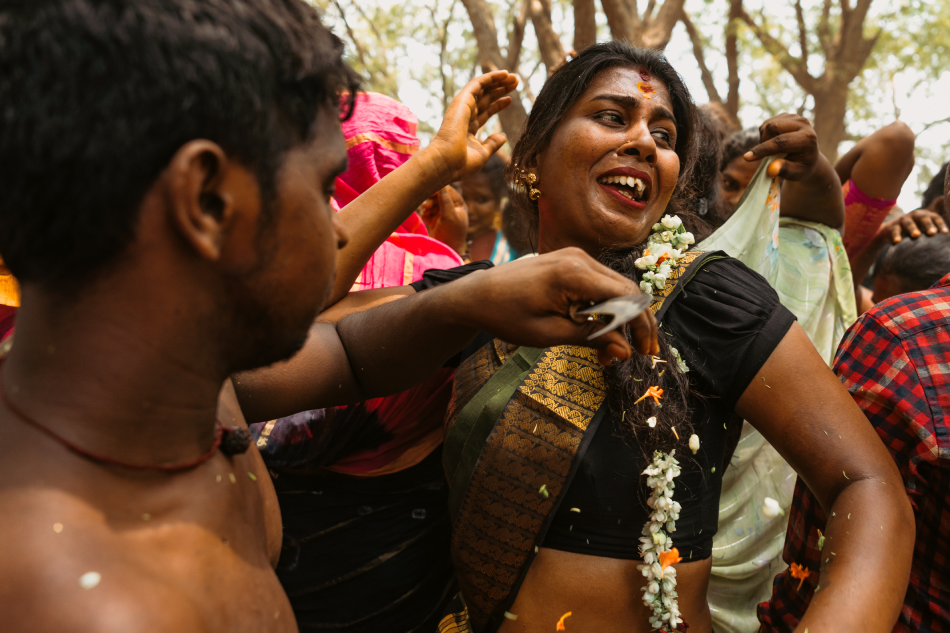
Koovagam is a special place. It is where people can be themselves. Identity becomes a part of the rituals that take place there. At Koovagam people do not have to hide who they are. They can openly express their identity. The rituals at Koovagam are, about embracing this identity. Koovagam is a place where identity is celebrated through rituals.
Villupuram, Tamil Nadu
Every year in a village inside Koovagam something really special happens. The village is very quiet. What starts as a festival for people becomes a huge gathering where people talk about their faith how they feel about their gender, old stories and how everyone should be treated with respect. This is the Koovagam Cultural Festival, in Villupuram. The Koovagam Cultural Festival is not something that happens one day. The Koovagam Cultural Festival is a statement.
The town of Koovagam has an old story about Aravan, the son of Arjuna from the Mahabharata. This story says that Aravan was going to be sacrificed so that his side would win the war.. Before he died Aravan wanted to get married.
Krishna, who was, in the form of Mohini made sure that Aravan got his wish. So Aravan married Mohini. The day Aravan was sacrificed.
After that Mohini was very sad because she was now a widow.
The story of Aravan and Mohini is still remembered in Koovagam. The people of Koovagam still tell the story of Aravan, the son of Arjuna and how he married Mohini, who was actually Krishna.
This story is not something you read about in books here. The people here actually live this story.
This thing happens for two weeks in the month of Chithirai which is around April or May. During this time thousands of transgender women, who are often called Aravanis go to Koovagam. These Aravanis come from, over India and even from other countries.
They dress up like brides. Tie the thali and apply sindoor on their forehead. The Aravanis. Dance and laugh and pray and they celebrate their marriage to Aravan.

Then the very next day the Aravanis break their bangles and wipe off the sindoor from their forehead and they mourn like widows.
This is what I think when I see people showing their grief. It is a sad and emotional thing. People are sad. They are not afraid to show it. They are being very open and honest, about how they feel. Ritualized grief is a way for people to express their feelings in a public way. Ritualized grief is something that people do when they are feeling sad. They want to show it to others.
Koovagam does something cool. It puts transgender identity right in the middle of everything. This is a deal because in India people who are transgender often have a tough time in their daily lives.. In Koovagam they are safe. The people of Koovagam do not try to explain why someone is transgender. They just accept it because of the stories they tell the rituals they perform and the memories they share. For the transgender community Koovagam is a place where they can be themselves, without fear. The transgender identity is a part of the village and it is respected.

The festival is held at the Koothandavar Temple which’s for Aravan, who people around here call Koothandavar.
Every day starts with people saying prayers and walking in processions.
At night people play music and perform. They all tell stories together.
The streets are filled with people wearing bright saris and a lot of makeup and flowers and mirrors and you can hear people laughing and arguing and wishing for things.
The Koothandavar festival is a time when life’s very busy and exciting for a few days.
The festival at the Koothandavar Temple is really something because it is all, about Aravan and the people who come to celebrate.
Koovagam is not a place where you can escape into a romantic dream world. Koovagam has things that do not make sense together it has contradiction.

Outside the area where the ritual happens a lot of people who take part in it go back to their daily lives in a world that does not treat them fairly. They are often denied things, like a place to live a job, protection and respect. But inside Koovagam these people are treated with respect and dignity. They are the brides, the widows, the people who come to worship the artists and the leaders. The festival does not make the problems they face disappear it actually shows them clearly. It makes us think about things that’re not easy to talk about.
Why is acceptance seasonal?
I wonder why people are only supposed to show reverence when they are doing something like a ritual. What is it, about these rituals that makes it okay to be reverent? Is reverence really allowed when we are following some kind of traditional ceremony? I think it is interesting that reverence is usually only seen within these boundaries of ritual.
I do not think dignity should have to come from stories, about gods and goddesses. Why can dignity not be something that people have on their own? Dignity is a thing that people should have and it seems strange that we have to look at mythology to understand what it is. The idea of dignity is important. Dignity itself should not have to be borrowed from anywhere especially not from mythology.
For a photographer, Koovagam is not about spectacle it is about responsibility.
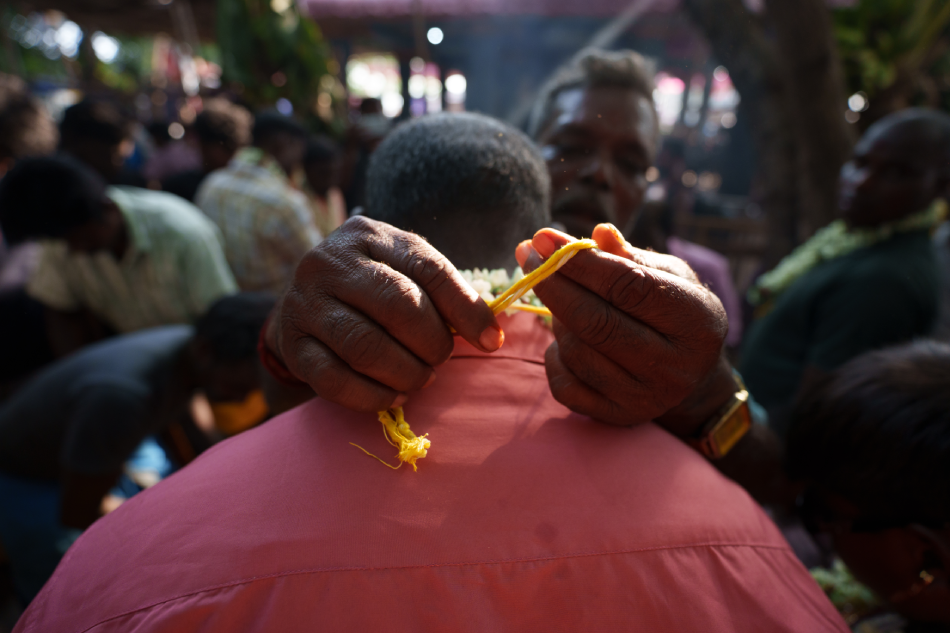
The visuals are really strong: they have fire rituals people crying with tears on their faces, costumes and people lying on the temple floor because they are very tired.. The real story of the festival is in the calm moments. For example when someone is tying a knot and their fingers are shaking.. The silence before the bangles are taken off. The festival is also about the look on someones face when they see themselves in a mirror and they feel okay with who they’re even if it is just for one day. The festival has these moments that show what it is really, about.
This festival is not something that you can just take a picture of. The festival must be seen in person.

Koovagam is a place that makes us think about culture in a way. It is not something that stays the same all the time. Koovagam shows us that tradition can be very old and still accept people who’re different. Our faith can make room for people who are not accepted by society. The rituals at Koovagam can be a way of fighting against things that’re not fair. Koovagam is all about Koovagam being a challenge to the ideas. Koovagam proves that tradition and faith can go hand in hand with being open, to things and accepting everyone.
This festival has been around, for a long time. It has not disappeared because it was easy to have it. Because the transgender community really needed it. The festival gave peoples lives meaning when they felt like they did not fit in. It helped people deal with their sadness and loss. The festival told a story where being transgender was not something but something that was meant to be. The transgender community found comfort in this festival. The story it told about transgender existence.
Today Koovagam has really grown. Lots of people are talking about it now. Media people are giving it a lot of attention.
Now we see NGOs and activists and researchers and artists coming to Koovagam. They are coming with the people who actually go there to pray.
This is a change. It is good that Koovagam is getting noticed.. It is also bad because Koovagam is in danger of being simplified.
The things that people really feel and experience, at Koovagam are being turned into things to watch. The pain that people feel is being turned into a show.
The festival requires one thing from every person who goes there: humility. The festival is really about being humble when you’re at the festival. This means that the festival asks for humility, from everyone who enters the festival.
You are not here to save anyone or anything. This is not a rescue mission. The people and things that need saving will have to wait. You are not here to save. Your job is something entirely.

You are not here to save.
I am not here to explain things. You want me to just do something not talk about it. I am supposed to do my job, which’s to get things done not to explain the things that I am doing. The thing that I am doing is what you want me to focus on not the explaining part.
I am here to listen to what the person has to say. The person is. I am supposed to pay attention to the person. Listening is what I am doing now. I will hear the person out. Understand what the person is saying.
Koovagam does not shout it just keeps going. It deals with things quietly. Every year is the same the sun beats down. The streets are dusty.. Koovagam tells a story that the world tries to forget. The story of Koovagam is that who you are is very important when people are sad they should be together and the things that make Koovagam special are the things that make room for the people who need the help. Koovagam is a place where the Koovagam culture’s very strong because it takes care of the people who are struggling the most.
When the festival is over the village goes back to being really quiet. The big crowds of people go home. The bright colors are not so bright anymore.. The festival leaves something behind a reminder that once a year, in Tamil Nadu the whole world changes for a little while. And when that happens you can see the truth the festival makes the truth visible.
Not comfortable truth.
Not easy truth.
But necessary truth.
Koovagam is not just a festival.
It is a mirror.
